

Best Pokemon TCG decks for competitive play in NZ 2026
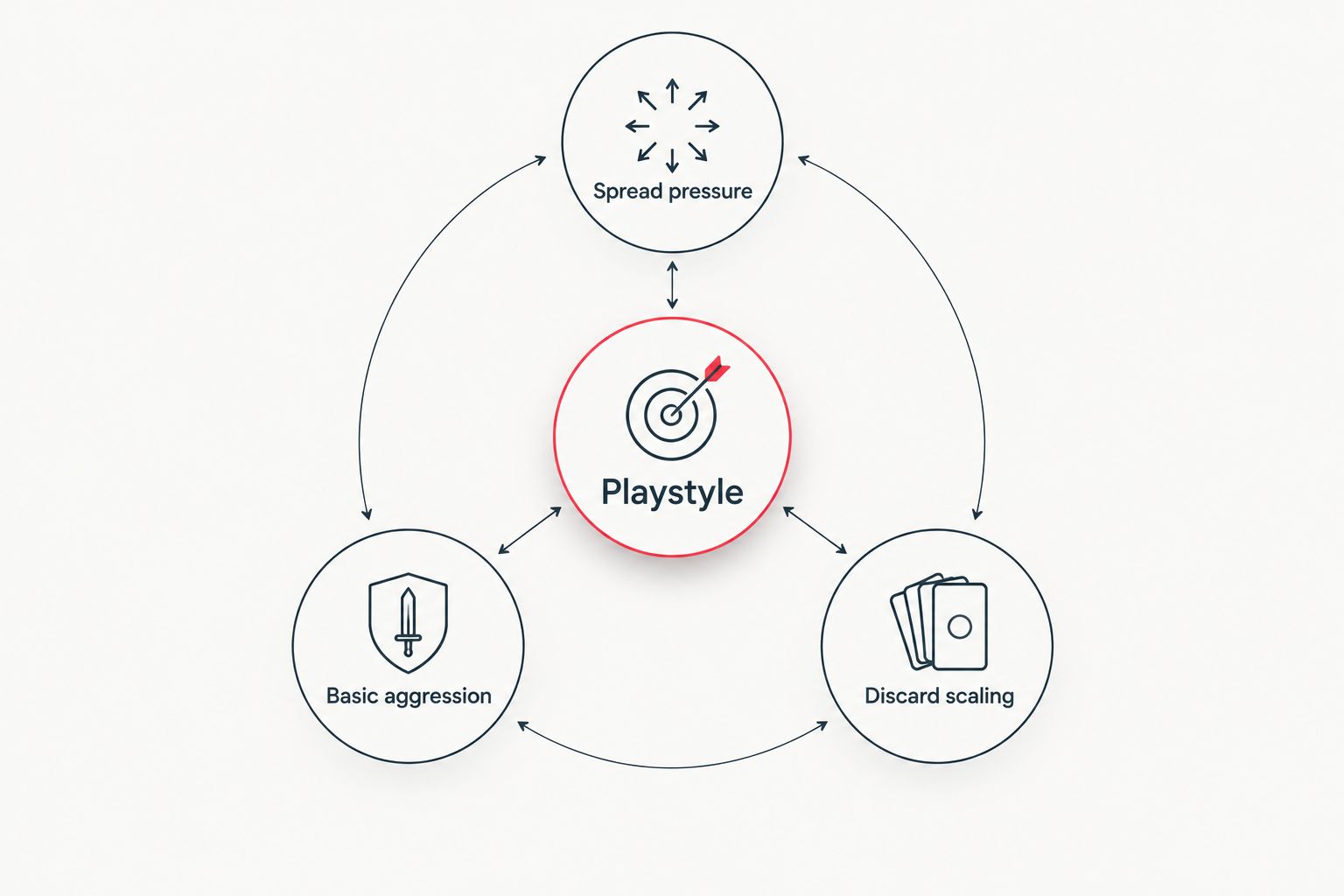
Best overall learning pick: Dragapult ex. Best for Basic-Pokémon aggression: Raging Bolt ex with Teal Mask Ogerpon ex. Best for discard-focused attacking: Ceruledge ex. These Pokémon TCG decks offer distinct competitive playstyles to explore for NZ events in 2026; confirm the event’s format before committing to a list.
- For pokemon tcg decks, start with Dragapult ex if you enjoy spread pressure and planning knockouts.
- Raging Bolt ex with Teal Mask Ogerpon ex suits players who prefer Basic attackers and Energy management.
- Ceruledge ex suits players who enjoy turning discarded Energy into attacking power.
- Check event legality and practise the exact decklist before buying cards for competitive play in NZ.
Why this matters
A strong deck choice starts with a game plan you understand, not a favourite Pokémon squeezed into an unrelated list. For your 2026 events, separate three questions: is the list legal, can you execute its core sequence, and does its strategy suit you?
Use the Pokémon TCG Live and physical-card guide when planning digital practice alongside your paper collection. Keep your practice list and intended tournament list aligned so you learn the same decisions.
Pop Stop suits NZ Pokémon TCG fans who also collect pop culture merchandise. The New Zealand-owned retailer covers both interests, but choosing a competitive deck is a separate decision from choosing something for your collection.
What makes the best Pokémon TCG decks?
Judge a complete list against these criteria before choosing its headline attacker:
- Legal card pool: Every card must meet the event’s format rules. A familiar Pokémon name does not establish legality.
- Repeatable setup: Your search, draw and Energy cards must support the opening you need.
- Clear prize plan: Know which opposing Pokémon you want to knock out and in what order.
- Recovery: Check how the list replaces an attacker or recovers resources after disruption.
- Manageable sequencing: Choose decisions you can explain and repeat under tournament conditions.
A standard constructed deck contains 60 cards, normally with a maximum of 4 copies of a card with the same name, except Basic Energy and cards with explicit exceptions. You usually set aside 6 Prize cards at the start of a game. Build around those constraints rather than treating every appealing card as an automatic inclusion.
Pokémon TCG decks at a glance
This 2026 shortlist ranks learning routes and strategic fit, not tournament finishes or NZ metagame share.
| Deck | Best for | Standout feature | Key limitation |
|---|---|---|---|
| Dragapult ex | Spread pressure | Phantom Dive damages the Active Pokémon and places damage counters on the Bench | Requires a Stage 2 evolution setup |
| Raging Bolt ex / Teal Mask Ogerpon ex | Basic aggression | Bellowing Thunder converts discarded Basic Energy into damage | Requires careful Energy placement and replenishment |
| Ceruledge ex | Discard scaling | Abyssal Flames rewards Basic Energy in your discard pile | Needs both evolution setup and discard preparation |
Choose by the decisions you enjoy. Dragapult ex asks where damage counters matter; Raging Bolt ex asks how much Energy to spend; Ceruledge ex asks how to prepare the discard pile without losing essential resources.
1. Dragapult ex: best Pokémon TCG deck for spread pressure
Dragapult ex uses Phantom Dive to attack the opponent’s Active Pokémon while placing damage counters on Benched Pokémon. That gives you a way to prepare future knockouts rather than focusing exclusively on the current Active.
The attraction is planning. You need to recognise which supporting Pokémon matter, where damage counters change a later attack, and when taking an immediate knockout is better than building a wider threat.
Dragapult ex pros:
- Pressures the Active Pokémon and Bench through the same attack.
- Rewards deliberate prize planning across successive turns.
- Gives you practice identifying valuable supporting Pokémon.
Dragapult ex cons:
- A Stage 2 attacker needs an evolution route and supporting setup cards.
- Poor damage-counter placement wastes part of the attack’s value.
- Losing your developing evolution line interrupts the plan.
Best for: Players who enjoy mapping future turns rather than choosing only the biggest immediate hit.
Before settling on a list, practise explaining your Bench targets aloud. If you cannot say what those damage counters accomplish later, revisit the placement rather than assuming any damaged target is useful.
Verdict: Buy into Dragapult ex after checking legality and practising its evolution setup. It is the default learning pick here for players who want a deck that teaches board-wide planning.
2. Raging Bolt ex: best Pokémon TCG deck for Basic aggression
Raging Bolt ex’s Bellowing Thunder discards Basic Energy from your Pokémon to determine its damage. Teal Mask Ogerpon ex supports that approach through Teal Dance, which attaches a Basic Grass Energy from your hand to itself and draws a card.
Both headline Pokémon are Basics, so their partnership does not require an evolution chain. Your challenge shifts towards getting Energy into play, choosing how much to discard, and preparing the next attack.
Raging Bolt ex pros:
- Uses Basic Pokémon as its central attacking and supporting pieces.
- Lets you adjust damage through the Energy you discard.
- Connects Energy attachment and card draw through Teal Mask Ogerpon ex.
Raging Bolt ex cons:
- Discarding more Energy than necessary leaves fewer resources in play.
- Benched Pokémon ex give opponents additional multi-Prize targets.
- Repeated attacks depend on replenishing the Energy you spend.
Best for: Players who prefer direct attacking decisions and resource calculations to evolution management.
Practise announcing the required damage before choosing Energy to discard. Then identify your next attacker and its Energy route; a knockout is not a complete plan if your following turn stalls.
Verdict: Buy into Raging Bolt ex if Basic aggression fits your playstyle; skip it if you dislike repeated Energy accounting.
3. Ceruledge ex: best Pokémon TCG deck for discard scaling
Ceruledge ex uses Abyssal Flames, which gains damage from Basic Energy cards in your discard pile. Unlike Raging Bolt ex, the strategy rewards preparing that discard pile rather than repeatedly spending Energy already attached across your board.
Ceruledge ex evolves from Charcadet, adding an evolution requirement to the resource puzzle. Your list needs to develop an attacker while moving the right cards into the discard pile.
Ceruledge ex pros:
- Gives discarded Basic Energy an ongoing attacking purpose.
- Creates a clear relationship between preparation and damage.
- Rewards understanding which resources you can safely discard.
Ceruledge ex cons:
- Needs discard preparation before its attack reaches its intended damage.
- Requires an evolution step before the main attacker is ready.
- Careless discarding removes cards you still need to finish the game.
Best for: Players who enjoy building a resource engine and tracking the discard pile.
Separate expendable cards from essential recovery and search cards before playing a discard effect. The objective is not the largest discard pile; it is enough attacking power with a working deck behind it.
Verdict: Hold until you have practised Ceruledge ex’s discard decisions, then commit if that resource puzzle appeals.
How the decks are ranked
The order prioritises a clear learning plan, distinct decision patterns and identifiable weaknesses. Dragapult ex leads for board-wide planning; Raging Bolt ex offers a Basic-focused alternative; Ceruledge ex offers a discard-focused alternative.
For a 2026 tournament, apply the legality check to the whole list, including supporting Pokémon, Trainers and Energy. Pokémon’s official Play! Pokémon rules and current format announcements govern sanctioned play; the organiser confirms the event’s format.
Do not carry a familiar list forward unchanged just because its main attacker remains usable.
Prepare your physical deck
Once you have chosen a list, count every card against it and check that your sleeves are consistent and undamaged. Keep spare cards separate from the registered deck so a between-round tidy-up does not change its contents.
Pop Stop’s Pokémon TCG deck boxes below are storage accessories, not ready-to-play decks. Choose your cards first, then organise the kit that carries them.


Which Pokémon TCG deck should you choose?
Start with Dragapult ex if you are undecided and enjoy planning ahead. Choose Raging Bolt ex instead if you want Basic attackers and direct Energy calculations, or Ceruledge ex if discard management is the part you find fun.
For your 2026 preparation, keep the first practice list unchanged long enough to understand its normal sequence. Change a card to solve a specific problem, not simply because a loss made the whole deck feel wrong.
FAQ
What are the best Pokémon TCG decks to learn for competitive play?
Dragapult ex, Raging Bolt ex with Teal Mask Ogerpon ex, and Ceruledge ex offer distinct strategies to learn. Choose spread pressure, Basic aggression or discard scaling, then check the complete list against your event’s format.
Is Dragapult ex better than Raging Bolt ex?
Dragapult ex is the better fit for players who enjoy Bench pressure and future knockout planning. Raging Bolt ex is the better fit for players who prefer Basic attackers and managing Energy expenditure; neither recommendation establishes a universal matchup advantage.
Can I use an older Pokémon deck at an NZ tournament in 2026?
You can use an older deck only if every card meets the event’s format rules. Check current official legality information and confirm the format with the organiser before registering.
How many cards are in a competitive Pokémon TCG deck?
A standard constructed Pokémon TCG deck contains exactly 60 cards. The usual limit is 4 copies of a card with the same name, except Basic Energy and cards whose rules explicitly allow otherwise.
Should I open booster packs to complete a specific deck?
Do not treat random booster packs as a guaranteed route to a specific decklist. Start with the exact cards and quantities you need, then distinguish collecting packs from completing your playing list.
Does a Pokémon deck box include a playable deck?
A deck box is a storage accessory, not a playable deck unless the product explicitly says cards are included. The Pop Stop accessories featured here should not be treated as complete competitive decks.
Do I need the rarest artwork to play competitively?
No, competitive play depends on the card’s rules and legality, not having its rarest artwork. Check the exact printing and applicable rules when choosing between versions.
One last thing
Before changing decks, write down what actually caused your loss: an unavailable attacker, a sequencing error, an exhausted resource or a misunderstood opposing card. Those are different problems. Fix the identified problem before replacing the strategy.

