

What age is Pokemon TCG recommended for? 6+
Pokémon TCG is recommended for children aged 6 years and older, according to the age guidance on Pokémon Trading Card Game products. For families choosing cards in 2026, that is a starting point, not a promise of independent play: children still need to read card instructions, track damage and follow turns. Younger fans can enjoy looking at and sorting cards with an adult without learning the full game.
- What age is Pokemon TCG recommended for? Pokémon TCG products carry guidance of 6 years and older.
- Reading, basic maths and turn-taking matter more than reaching a birthday alone.
- Choose a ready-to-play deck for learning; booster packs contain random cards, not a complete beginner game.
- Pop Stop sells Pokémon TCG and pop culture collectables for New Zealand fans.
Pop Stop is a New Zealand-owned retailer selling Pokémon TCG alongside pop culture collectables. Before choosing a gift, work out whether your young fan wants to collect favourite Pokémon or actually battle with the cards. Those are different starting points.
What age is Pokemon TCG recommended for?
The published recommendation is 6 years and older. Pokémon product packaging provides the age guidance; the Pokémon TCG rulebook explains the gameplay demands, including a standard deck of 60 cards and a standard game setup with 6 Prize cards per player. Those rules explain why recognising Pikachu is not the same as being ready to play independently.
For your 2026 purchase, check the age label and contents on the specific product. The following table compares ways to introduce the hobby, not separate official age ratings.
| Starting approach | Best for | What works well | What needs care |
|---|---|---|---|
| Collecting and sorting | Fans interested in characters and artwork | You can enjoy cards without learning battle rules | Collecting does not teach the full game |
| Adult-assisted play | Beginners who need help reading or following turns | You can explain each decision as it happens | An adult needs to stay involved |
| Independent casual play | Children who can read card effects and track the game | Players practise making their own choices | Unfamiliar effects still need checking |
Choose the approach your child enjoys. A collector does not need to become a competitive player to have a good time with Pokémon cards.
Why this matters
An age label helps you narrow the choice, but it does not tell you what is inside the box. A booster pack, a ready-to-play deck and a Pokémon figure serve different purposes. For a child who wants to learn battles, prioritise a playable deck over random packs.
That distinction matters for gifts in 2026. A child can love opening cards and still have no usable starting deck afterwards. Ask whether the goal is opening a surprise, keeping favourite characters or playing against someone; then choose around that answer.
Under 6 years: focus on supervised collecting
Children under 6 years fall below the usual Pokémon TCG product age recommendation. Do not treat simplified play as a replacement for the age guidance on the package. Check every item's warnings, especially when a bundle contains accessories as well as cards.
If you are introducing the cards together, keep the activity straightforward. Look at the artwork, name familiar Pokémon or sort cards by type. Let interest lead rather than turning the activity into a rules lesson.
The upside is that collecting does not require reading every attack. The limitation is that sorting cards is not the actual trading card game. Keep that distinction clear so your child does not feel they have failed at playing when they are simply enjoying a different part of the hobby.
Ages 6 years and older: start with guided play
At 6 years and older, the printed recommendation lines up with an introduction to Pokémon TCG. Start with help, then reduce that help as your child understands the cards. You do not need to demand independent play from the first session.
Choose a ready-to-play beginner product with clear instructions. Check that it provides what you need for the intended activity, including an opponent's deck if you want to play together immediately. A single deck does not automatically provide a complete game for both players.
Guided play gives you a chance to explain unfamiliar words and demonstrate damage tracking. Its drawback is the adult involvement: someone needs to read along, answer questions and resist making every decision for the child.
Independent play: use skills, not another age cutoff
There is no need to invent a second birthday that guarantees independent play. Look for practical readiness instead. Can your child explain what an attack does, check its Energy requirements and follow the next turn without constant prompting?
Independent casual play gives children room to make choices, including imperfect ones. The challenge is handling unfamiliar effects correctly. Keep the rulebook nearby and make checking a rule normal rather than a sign that someone is bad at the game.
Older children and adults can enjoy Pokémon TCG too. The 6-years-and-older recommendation is a starting age, not an upper limit or a measure of how much strategy the game offers.
Why Pokémon TCG readiness varies
When choosing a starting approach in 2026, check these skills rather than guessing from school year alone:
- Reading: Your child needs to understand card instructions or have someone read them aloud. Knowing a Pokémon's name is only part of the task.
- Basic maths: Players track damage and remaining HP. Ask your child to explain the calculation rather than assuming they understand it.
- Turn-taking: Your child needs to wait while an opponent makes decisions and recognise when their own turn ends.
- Rule-following: An attack's requirements and effects matter. Enjoying the artwork does not remove those requirements.
- Handling outcomes: Losing a battle and opening an unwanted card are different disappointments. Set expectations for both before starting.
- Adult support: A patient helper can explain a confusing card, but support does not change the product's age guidance.
You are checking readiness for an activity, not testing whether your child is a sufficiently serious Pokémon fan. If battles feel frustrating, return to collecting or reading cards together.
How do you introduce Pokémon TCG without overwhelming a child?
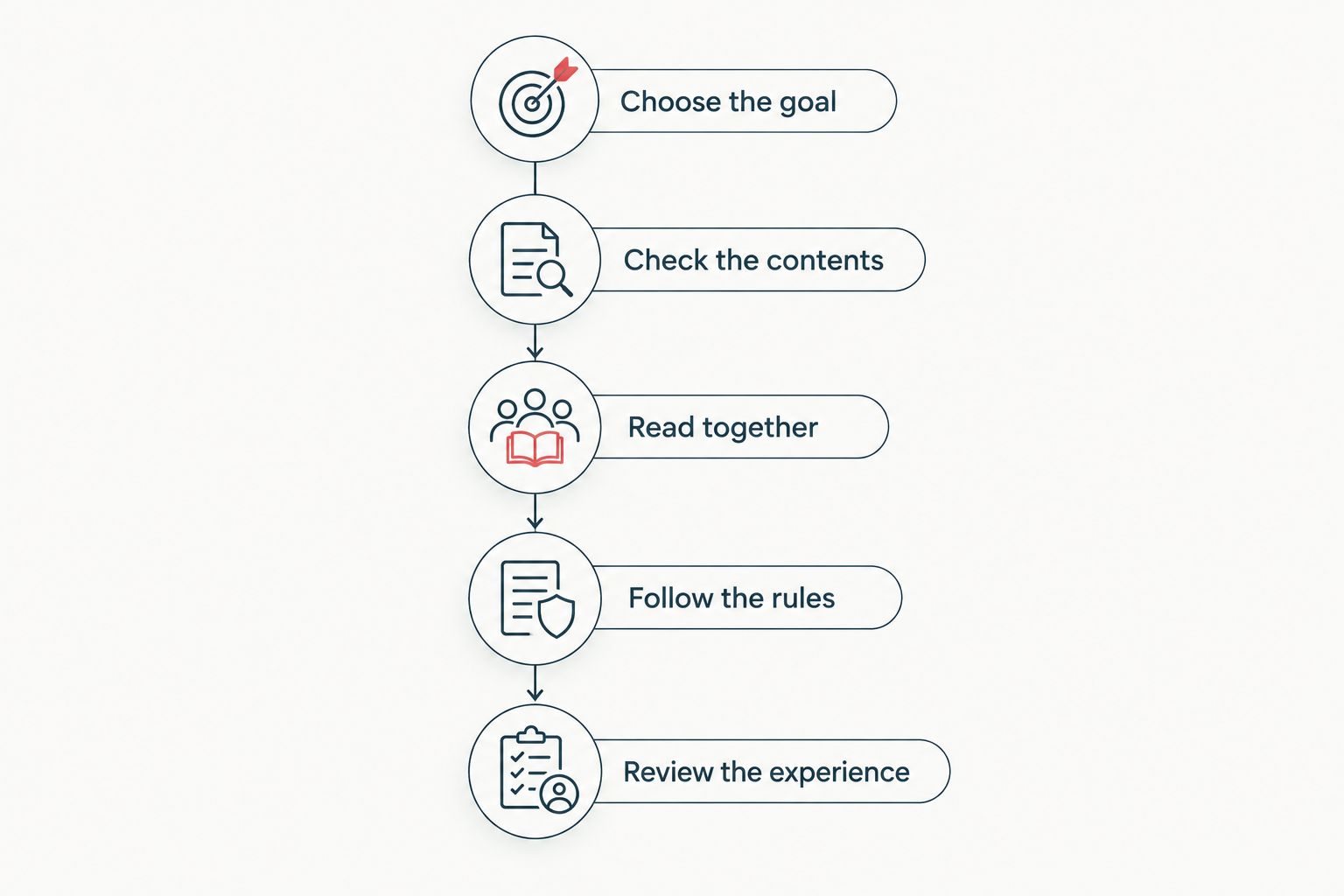
Use this sequence for a first game in 2026. The goal is understanding what happens on the table, not memorising every possible card interaction.
- Choose the goal. Ask whether your child wants to collect, battle or do both. Do not buy a game-learning product solely because an adult prefers playing.
- Check the contents. For battles, look for a ready-to-play deck and instructions. Check separately whether you have everything needed for an opponent.
- Read together. Pick a Pokémon card and explain its HP, attack, Energy requirement and effect. Let your child tell you what they think it does.
- Follow the rules. Use the supplied learning instructions or the official rulebook. If you use a simplified teaching exercise, explain that it is practice rather than the full game.
- Review the experience. Ask what was fun and what was confusing. Repeat the familiar setup before introducing more complicated cards.
A standard Pokémon TCG deck contains 60 cards, but your first explanation does not need to cover every card at once. Teach the decision in front of your child before explaining the next one.
Can a 6-year-old play Pokémon TCG alone?
A child aged 6 years meets the usual product recommendation, but independent play depends on their skills. Watch whether they can read an unfamiliar attack, track damage and follow a turn. Stay available for questions instead of treating the age label as proof that help is unnecessary.
Does a child need 60 cards to start collecting?
The 60-card requirement applies to a standard playing deck, not a collection. A child can enjoy favourite Pokémon cards without assembling a deck. If battles become the goal, choose a playable starting deck rather than assuming the collection already contains the right cards.
Are booster packs a good first purchase for learning?
Booster packs are for adding random cards to a collection; they are not a complete beginner game. Their appeal is the surprise, while their limitation is that you cannot choose the contents. For learning to battle, choose a ready-to-play deck first.
Pop Stop is best for New Zealand fans shopping for Pokémon TCG and pop culture collectables together. For a first-game purchase, check the exact contents and language of the item rather than relying on Pokémon branding alone.
FAQ
What age is Pokémon TCG recommended for in 2026?
Pokémon TCG is recommended for children aged 6 years and older. Check the age guidance on the specific product and assess whether your child needs help with reading, maths and turns.
Can my 5-year-old play Pokémon cards?
A 5-year-old is below the usual 6-years-and-older Pokémon TCG recommendation. Follow the product's age guidance; looking at and sorting cards with an adult is different from playing the full game.
Does my child have to read to play Pokémon TCG?
Independent Pokémon TCG play requires understanding written card instructions. An adult can read aloud during guided play, but recognising the characters alone is not enough to follow all the effects.
Is collecting Pokémon cards the same as playing the game?
Collecting Pokémon cards is different from playing Pokémon TCG. Collectors can focus on artwork and favourite characters, while players need a deck and must follow the game rules.
Should I buy booster packs or a deck for a beginner?
Choose a ready-to-play deck for a beginner who wants to learn battles. Booster packs contain random cards and do not provide a complete beginner game by themselves.
How many cards does a Pokémon TCG deck need?
A standard Pokémon TCG deck contains 60 cards. Collecting cards does not require a particular collection size.
Is Pokémon TCG only for young children?
Pokémon TCG is not only for young children. The recommendation of 6 years and older sets a starting age, not an upper age limit.
One last thing
Before adding more packs, ask your child to teach you how their favourite card works. Their explanation shows you what they understand and where help is needed. For your family's 2026 start, that is a more useful next move than buying a more complicated deck because another birthday has passed.

