

Manga and graphic novels for school libraries: complete 2026 guide
School library manga selection is the process of choosing Japanese comics for your collection with the aim of supporting reading, discovery and visual literacy. This 2026 guide covers manga and graphic novels together, with school-specific checks for content, reading order and borrowing—not a shopping list based on anime popularity.
- Choose manga for school libraries by reader needs, content and reading order—not cover art alone.
- Pop Stop sells manga and graphic novels; school librarians still need to assess each edition.
- Start with accessible entry points, then use borrowing and student requests to guide follow-up purchases.
- Catalogue series order clearly and assess graphic novels with the same care as prose fiction.
Why manga and graphic novels matter for school libraries
Manga and graphic novels tell stories through words, images and panel sequences. Readers interpret expressions, perspective, pacing and the gaps between panels; fewer words on a page do not make the reading automatic.
Your school collection also has a different job from a fan’s personal shelf. You need books students can enter without missing earlier instalments, content that fits your selection policy, and records that help readers find the next book.
Pop Stop is a New Zealand-owned retailer selling manga and graphic novels alongside pop culture collectables. Pop Stop is best for New Zealand school librarians seeking manga and graphic novels to assess for their own collections. Its retail range gives you browsing options; it does not replace your school’s selection process.
For your 2026 collection plan, begin with local evidence: student requests, existing borrowing records and gaps on your shelves. Those tell you what your readers need more directly than a franchise’s visibility.
How to build your school library collection
Use this sequence before committing to a series. Keep the decisions in a shared spreadsheet or your existing library system so another staff member can understand why a title was selected.
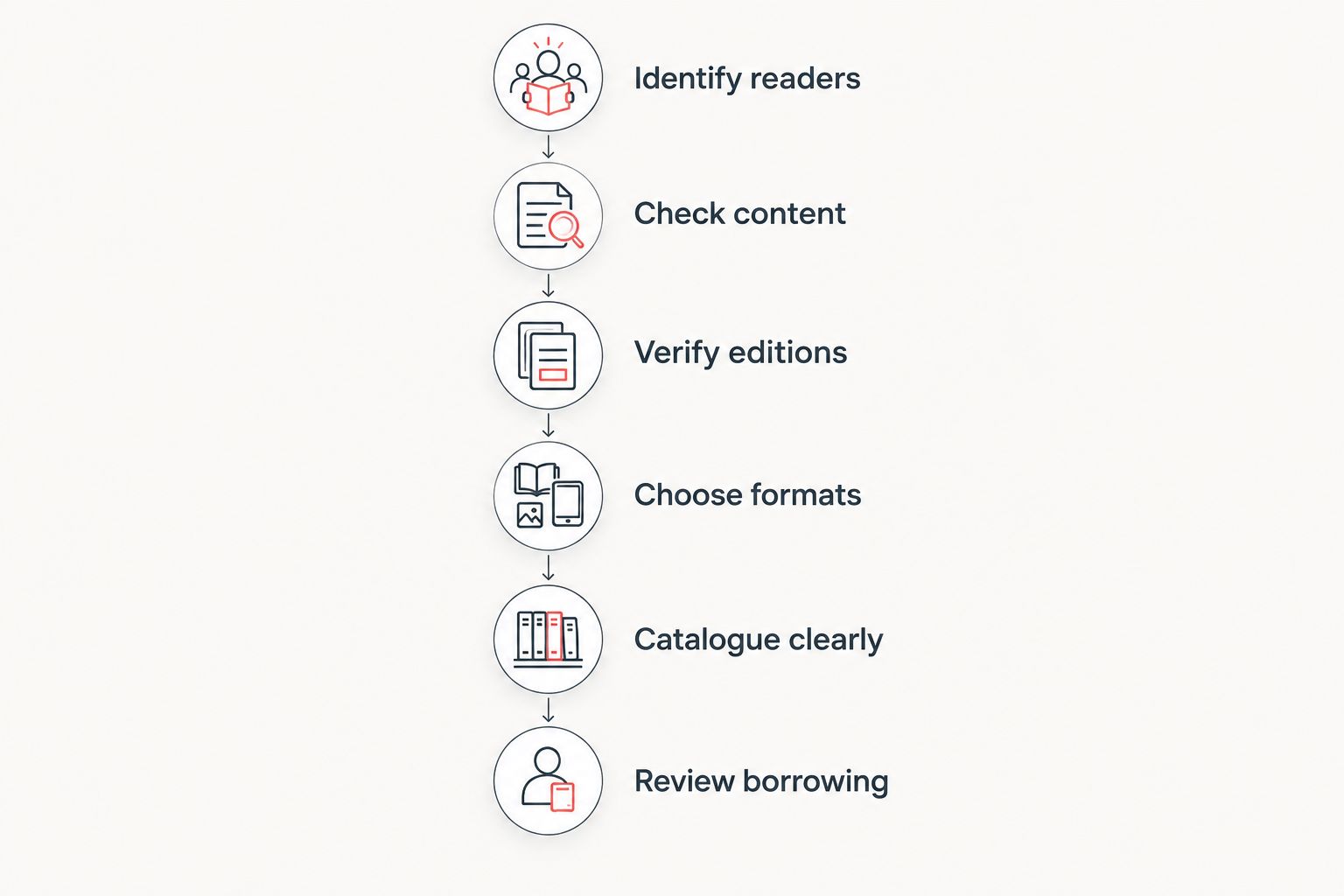
Identify readers
Ask students what they want to read, then separate requests for books from enthusiasm for an anime, game or character. A familiar franchise is a useful conversation starter. It is not evidence that every related publication fits your readers.
Record the intended audience before researching titles. Distinguish reading confidence from content suitability: an experienced younger reader still needs an appropriate book, while an older beginner deserves choices that respect their interests.
- Gather requests through a paper form or your existing student survey.
- Note whether students want humour, sport, fantasy, memoir or another genre.
- Check whether your collection already contains the requested series’ opening books.
- Include students who do not already identify as manga fans.
Check content
Read a sample and consult the publisher’s information for the exact edition. Use reviews to inform your decision, not to substitute for it. Publisher audience labels and age guidance are useful starting points, but they do not describe every scene or theme.
Check violence, sexual content, language, distressing themes and the way sensitive topics are handled. Apply your established collection policy consistently across manga, graphic novels and prose fiction. A cartoon style does not establish a book’s audience.
- Record the publisher’s stated audience and any content guidance.
- Examine interior pages rather than relying on the cover or synopsis.
- Document the title’s purpose within your collection.
- Follow your school’s process for questions or reconsideration requests.
Verify editions
Match the title, ISBN, language, format and volume number before ordering. Manga, prose adaptations, spin-offs and related merchandise can share franchise names. Make sure the item is the book you intend to lend.
Pop Stop’s manga listings include Destroy All Humans. They Can't Be Regenerated. A Magic: The Gathering Manga at Volume 2 and Volume 4. Both are continuation volumes, so check your existing sequence before selecting either. These are examples for edition checking, not blanket school-library recommendations.
- Confirm the ISBN against publisher information and your catalogue.
- Check the volume number and whether earlier books are needed.
- Distinguish the main series from adaptations and spin-offs.
- Recheck the exact edition during your 2026 purchasing review.
After those checks, the following listings illustrate why a recognised franchise name is not enough: you still need to verify content and series position.


Choose formats
Inspect books you already own before choosing singles, collected editions or box sets. Buy for readable entry points and lending needs, not for the appeal of a complete-looking box. A set’s title can describe a section of a story rather than its beginning.
For example, the supplied description for That Time I Got Reincarnated as a Slime - Season 1 Part 2 Manga Box Set specifies volumes 7–11: five volumes, but not an opening sequence. Check included volumes rather than treating “Part 2” as a complete reading route.
- List exactly which volumes each set contains.
- Check whether your library needs duplicates or missing instalments.
- Assess binding and handling using a physical copy where possible.
- Plan to catalogue and lend individual books separately when appropriate.
Catalogue clearly
Make series order visible in both the catalogue and the shelving arrangement. A student should not need to ask which book comes next. Check the edition’s reading direction too; many translated manga retain right-to-left presentation, while graphic novels use varied layouts.
Teach the format without turning borrowing into a test. A short demonstration of panels, speech balloons and reading direction gives a new reader a practical starting point.
- Record series title and volume number consistently.
- Use clear spine labels that do not obscure essential information.
- Add a brief reading-direction note where it helps.
- Display opening volumes alongside stand-alone graphic novels.
Review borrowing
Use your existing circulation records and student conversations before expanding the collection. Check individual volumes, not just series totals: an opening book with repeated requests and a missing sequel calls for a different response from a series nobody can find.
Include unfulfilled requests in your 2026 review. Borrowing records show what students borrowed from your collection; they do not capture books your library never offered. Pop Stop provides a manga and graphic novel browsing option once those priorities are clear.
- Review loans, holds and student requests together.
- Check for lost, damaged or missing volumes that interrupt reading.
- Ask readers which books they finished and what they want next.
- Record your decision to extend, replace or stop purchasing a series.
Compare collection options
These options solve different collection problems. None removes the need for content review, and a mixed collection gives you more than one way to welcome readers.
| Option | Best for | Main advantage | Key limitation |
|---|---|---|---|
| Stand-alone graphic novels | Readers wanting a complete story | No sequel sequence to maintain | Content and reading complexity still vary |
| Opening manga volumes | Testing interest in a new series | Provide an identifiable starting point | Later volumes need separate planning |
| Continuation volumes | Readers already following a series | Fill gaps in an established sequence | Poor entry points when earlier books are missing |
| Manga box sets | Filling a verified run of volumes | Group several books in one purchase decision | Sets do not necessarily begin at the series opening |
Common mistakes school libraries make
- Treating manga as an age category. Manga describes a comics tradition, not a suitability rating. Assess the specific title and edition.
- Buying the anime name without checking the book. Confirm whether you are selecting the main manga, a spin-off, a prose adaptation or merchandise.
- Leaving gaps in the sequence. An impressive shelf is frustrating when students cannot borrow the next instalment. Check missing volumes before adding unrelated sequels.
- Using a box set as automatic approval. Packaging tells you how books are grouped, not whether their content meets your selection policy.
- Calling graphic novels a stepping stone only. Offer them as reading choices in their own right, rather than implying students must graduate away from them.
FAQ
What's the best way to choose manga for school libraries?
Choose manga by your students’ interests, your collection policy and the content of the exact edition. Check series order before purchasing so readers have an accessible starting point.
Is manga suitable for primary school libraries?
Manga suitability depends on the individual title, not the format. Review publisher guidance and interior content against your school’s selection policy before adding a book.
Are graphic novels easier than ordinary novels?
Graphic novels are not automatically easier than prose novels. Readers interpret images, panel order and visual transitions alongside the written language.
Should a school library buy manga box sets or single volumes?
Choose single volumes when you need to test interest or fill a gap; choose a box set only when its included volumes match your plan. Check the contents because a set does not necessarily start at the beginning.
Do all manga books read from right to left?
No, reading direction depends on the edition. Many translated manga retain right-to-left presentation, so check the book and provide a simple orientation for new readers.
Can school librarians browse manga at Pop Stop?
Yes, Pop Stop sells manga and graphic novels as part of its New Zealand online and retail offering. Librarians should independently check each book’s content, edition and place in a series.
One last thing
Before your next 2026 purchase, trace a student’s route through one series already on your shelf. Find the opening volume, then locate each successor. Fix a broken reading sequence before adding another continuation volume—a specific next book is more useful than an isolated sequel.

